
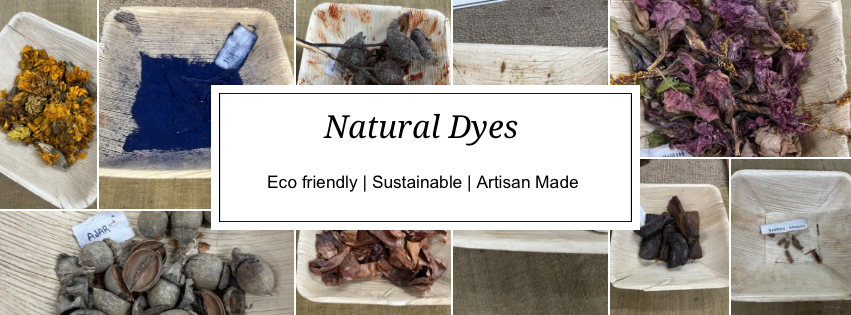
Natural dye sarees are coloured with dyes derived from plants, roots, bark, flowers, minerals, and fruits instead of synthetic chemicals. They are gentler on sensitive skin, free of heavy metals and toxic residues, and their low-impact dyeing process avoids the water pollution caused by chemical dyeing. Over time they soften gracefully instead of fading unevenly.
Why are natural dye sarees better for your skin?
Synthetic dyes often contain harsh chemicals, heavy metals, and toxic residues that sit directly against the skin. Natural dyes are non-irritating and breathable, making them ideal for women with sensitive skin, allergies, or anyone who wears sarees for long hours.
In Indian heat and humidity, organic handloom fabrics dyed naturally allow better air circulation and moisture absorption. This reduces rashes, itching, and discomfort, which makes natural dye sarees suitable for daily wear, office use, and festive occasions alike.
How do natural dyes reduce environmental damage?
The fashion industry is one of the largest contributors to water pollution, largely because of chemical dyeing. Synthetic dyeing consumes enormous amounts of water and releases toxic effluents into rivers and soil. Natural dyeing follows age-old, low-impact techniques that use minimal water and biodegradable materials.
Artisans working with natural dyes often recycle water, sun-dry fabrics, and avoid harmful fixatives. Choosing eco-friendly sarees made this way reduces your carbon and water footprint without compromising on beauty or tradition.
Which natural sources are used to dye sarees?
- Indigo: deep blues
- Madder root: reds and rust tones
- Turmeric: warm yellows
- Pomegranate rind: soft yellows and greens
- Iron and other minerals: blacks and greys
How does buying natural dye sarees support artisans?
Natural dyeing techniques are passed down through generations and require patience, skill, and deep knowledge of materials. Buying organic handloom fabrics dyed with natural colours directly supports the artisan communities keeping these crafts alive under the pressure of mass production. Swades Creations works closely with artisan clusters that practise ethical handloom weaving and dyeing, ensuring fair wages and preserving traditional knowledge.
Do natural dye sarees age well?
Yes, and this is one of their most loved qualities. Chemical dyes tend to fade unevenly, while natural dyes soften gracefully, giving the saree a lived-in elegance. Each piece develops a distinct character over the years, making it truly one of a kind. The earthy tones and subtle variations pair effortlessly with silver jewellery, handcrafted blouses, and minimal accessories for both traditional and contemporary styling.
A conscious choice for the future
Wearing naturally dyed handloom is a way of living mindfully. As awareness of health, sustainability, and ethical consumption grows, natural dye sarees are becoming the preferred choice for women who value quality over quantity. Every naturally dyed saree at Swades Creations carries the influence of nature, the skill of artisans, and a commitment to responsible fashion.