
Tussar Silk Saree


Tussar Silk Sarees at Swades Creations
Tussar silk is a wild silk handwoven by tribal artisan communities in eastern and central India, known for its natural gold sheen and breathable weave. Swades Creations offers a Silkmark Certified collection of tussar sarees sourced from Bhagalpur in Bihar, Chhattisgarh and Jharkhand. Tussar is known for its natural gold sheen, rich texture and breathable, porous weave, which makes it lighter and more comfortable in hot, humid climates than conventional mulberry silk. The collection spans plain earthy weaves, zari-bordered festive pieces and Wax Batik handwork sarees.
Tussar silk (also spelled tussah or tasar) is called wild silk because the silkworms are reared in open forest environments rather than indoor farms, feeding on forest trees. This gives the yarn its slight natural irregularity, deep texture and honey-gold undertone, so no two tussar sarees are exactly alike.
Why Tussar Is Called Wild Silk
Unlike mulberry silk, which comes from domesticated silkworms raised indoors, tussar is produced by silkworms that grow in the forests of eastern and central India. Tribal and artisan communities in this belt have preserved the traditional methods of cocoon collection, yarn extraction, dyeing and weaving for centuries. The open-air rearing produces a shorter, textured fibre, and that texture is exactly what gives tussar its earthy character and matte-gold glow.
What Makes Tussar Silk Special
- Natural gold sheen: The fibre carries a warm golden undertone even before dyeing.
- Breathable structure: Tussar's porous weave makes it one of the few silks comfortable in Indian summers.
- Light yet strong: It delivers the presence of silk without the weight of heavy traditional weaves.
- Takes dye beautifully: Rich colours stay vibrant over time, from tomato red and warm orange to purple and turquoise.
- Organic irregularity: Slight variations in the yarn add depth and confirm handloom origin.
Designs in Our Tussar Collection
The palette celebrates tussar's earthy base: warm oranges, tomato reds, purples, turquoise and natural golds. Some sarees carry Wax Batik handwork, others delicate zari borders. This range covers everyday elegance, office wear, cultural events and festive occasions in a single fabric family.
When to Wear a Tussar Silk Saree
- Summer functions and day events: Tussar's breathability makes it the most weather-friendly silk.
- Office and formal daywear: Plain and subtly bordered tussar reads as quiet luxury.
- Weddings and festivals: Zari-bordered and richly dyed tussar holds its own at celebrations without the weight of brocade silk.
- Cultural events and gifting: The wild-silk story and handloom character make tussar meaningful beyond its look.
Styling Tussar Silk
Pair with a classic blouse and minimal jewellery for daytime, or layer for evening gatherings. Tussar's rustic matte surface pairs especially well with pearls; Swades Creations' handcrafted shell pearl neckpieces are designed as companions to this collection, the soft shine of pearl against the earthy glow of wild silk.
Caring for Your Tussar Silk Saree
- Dry clean only.
- Store wrapped in breathable muslin, away from moisture and direct sunlight.
- Iron on low heat from the reverse side.
- Refold every few months to prevent set creases.
Why Buy Tussar Sarees from Swades Creations
- Silkmark Certified purity across the collection.
- Woven by tribal and artisan communities using traditional methods, sourced through direct artisan relationships.
- A naturally sustainable silk, reared in open forest ecosystems.
- Ships across India and internationally from Mumbai.
Frequently Asked Questions about Tussar Silk Sarees
What is tussar silk?
Tussar silk is a wild silk produced by silkworms reared in open forest environments in eastern and central India, mainly Jharkhand, Bihar and Chhattisgarh. It is known for its natural gold sheen, rich texture and breathable weave, and is handwoven by tribal and artisan communities using centuries-old methods.
Why is tussar called wild silk?
Tussar is called wild silk because its silkworms grow in natural forest habitats, feeding on forest trees, rather than being farm-raised indoors on mulberry leaves. This open-air rearing produces a textured, slightly irregular fibre with a warm golden undertone that domesticated mulberry silk does not have.
What is the difference between tussar silk and mulberry silk?
Mulberry silk is smooth, uniform and glossy, produced by domesticated silkworms. Tussar is textured, matte and naturally golden, produced by wild silkworms. Tussar is also more breathable and lighter, making it better for warm climates, while mulberry suits high-shine formal wear.
Is Kosa silk the same as tussar silk?
Kosa is the Chhattisgarhi name for tussar silk. All Kosa is tussar, and Kosa from the Champa belt of Chhattisgarh is considered among the finest tussar in India. Swades Creations offers a dedicated Kosa silk collection alongside this broader tussar range.
What is the difference between tussar silk and raw silk?
Tussar refers to the silk that is sourced from Antheraea moths that live in the wild and feed on forest leaves, and the silk has a natural golden tone. Raw silk is derived from the Bombyx mori moth and has not been degummed; the moths are fed cultivated mulberry leaves. Raw silk retains its natural sericin gum which makes it slightly stiffer, is naturally in white or cream shades and is highly receptive to dye, so the sarees come in bright and bold shades with sheen. Tussar silk has a natural golden matte finish and is challenging to dye, hence tussar sarees come in more earthy and natural shades.
Is tussar silk good for summer?
Yes. Tussar has a porous, breathable structure that makes it one of the most comfortable silks for hot and humid weather. It is significantly lighter than traditional brocade silks, which is why tussar sarees are popular for summer functions and daytime events.
Is tussar silk cruelty free?
Tussar silk is not automatically Ahimsa (cruelty-free) silk, but it can be. In the conventional method, cocoons are boiled with the silkworm inside to keep the silk thread continuous and long, giving a smoother, more continuous weave; this is the more common process. In Ahimsa tussar, cultivators wait for the moth to naturally bore its way out of the cocoon, and only then collect and spin the discarded casing, which gives the fabric a highly textured feel.
Is tussar silk GI tagged?
Yes, tussar silk is GI tagged, but the tag is region-specific rather than a blanket certification for all tussar silk. Different regions have earned Geographical Indication (GI) tags for their unique tussar weaving and production methods; for example, Bhagalpur Tussar from Bihar and Chhattisgarh tussar silk sarees are both GI tagged.
How long does it take to weave a tussar silk saree?
A tussar silk saree can take anywhere between 3 and 20 days to weave. The weaving time depends on the intricacy of the design: plain weaves are quicker, while detailed borders and dense motifs take considerably longer.
Do tussar handloom sarees come with a blouse?
Yes, handloom tussar sarees come with a blouse piece, which can be tailored to your preferred fit and style.
How can I identify genuine tussar silk?
To check if tussar silk is genuine, use the silk burn test: pull a few loose threads, hold them with tweezers over a fireproof surface, and briefly touch them to an open flame.
- Real silk: burns slowly, self-extinguishes when removed from the flame, smells like burnt hair, leaves a dark, crumbly powdery ash bead
- Synthetic fabric: burns rapidly, keeps burning after removal, smells like plastic, leaves a hard melted lump
The most reliable everyday assurance, however, is Silkmark certification, which every Swades Creations tussar saree carries.
How do I care for a tussar silk saree?
Dry clean only. Store the saree wrapped in breathable muslin away from moisture and direct sunlight, iron on low heat from the reverse side, and refold it every few months to prevent permanent creases. Each time the saree is worn, leave it open under a fan to remove moisture like sweat before folding it back. Well-kept tussar lasts for decades and softens gracefully with age.
Testimonials
Excellent Collection. Promoting Indian hand woven art to urban people. Wide variety from across India.
We visited swades at Bhatia Wadi exhibition, loved the collection of dress material and sarees, fantastic colour and weaving, very Classy. We bought a dress material. Will come back for more
Swades creations have a lot of beautiful collection of sarees and I am very pleased with the quality of the sarees. All the sarees are beautiful and elegant. Parul is a wonderful person. I bought multiple sarees from her, I loved all of them. She personally tracks the parcel after being dispatched, and makes sure I receive the parcel. I would highly recommend Swades Creations.
Excellent customer service and a wide variety of handloom sarees!!

Seeing my Mom & MIL wear Tussars, I always felt Tussar was for 60 plus and that I had a long way to go, but this particular saree made me change my mind. When Parul shared the picture with me casually, I liked the colour and the print as it was very unusual but never thought I would get it for myself. I then went on and bought it for my MIL. However when I received it, tables reversed, my MIL gifted it to me for my birthday and I was thankful she did! As I wore it on my special day “Wolah!!! I fell in love with it even more and with myself:) all over again!!!”. The icing on the cake was the blouse that Parul handpicked and in my opinion it truly added to the oomph!!!! Thank you Parul for this amazing ensemble. May Swades Creations have more such creations that we can mindlessly invest in and treasure for life :)
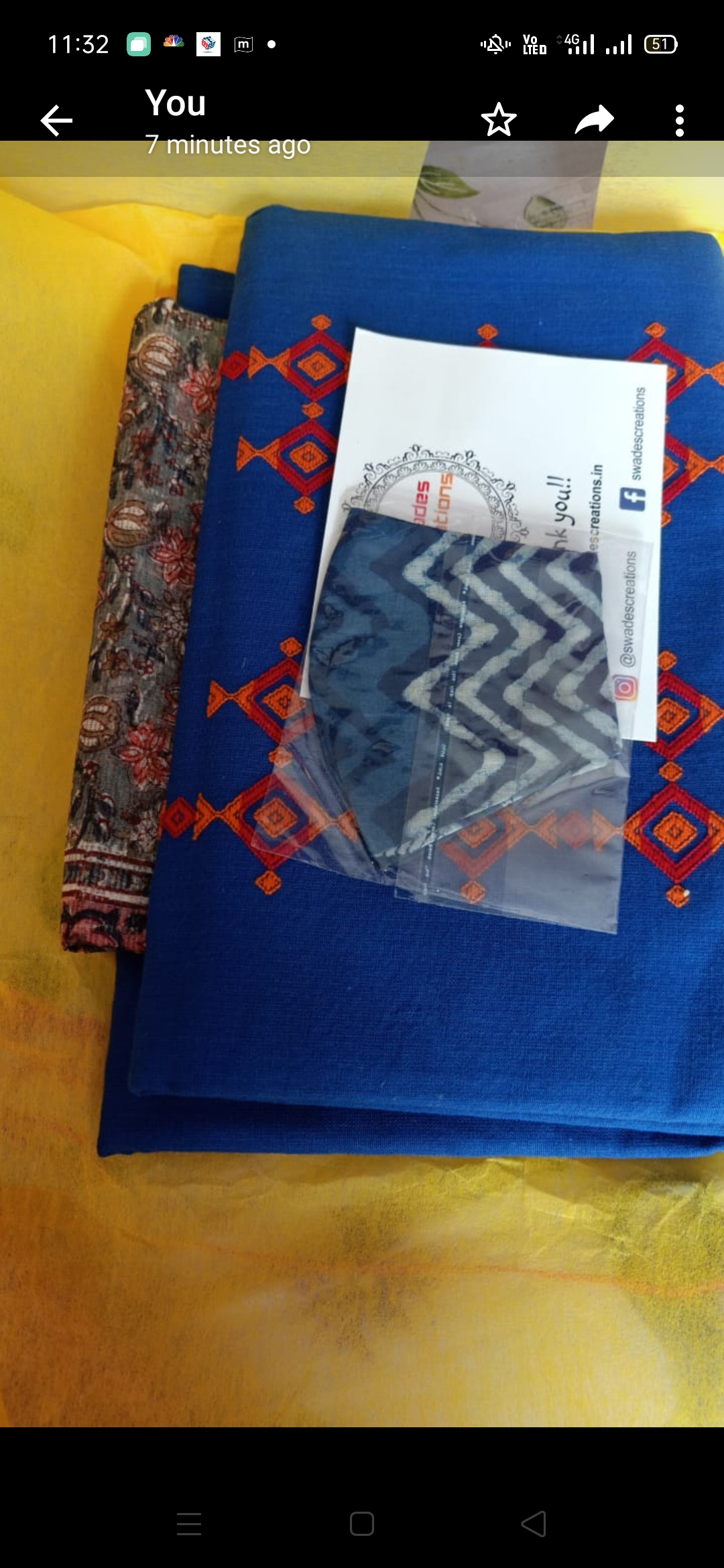
Just received this beautiful kurta dupatta set. It was exquisite, exactly of my taste. What amazed me was the wonderful and elegant packaging. Quite impressive...keep it up. Highly recommend. Thank you for the service
Ordered two sarees. Awesome collections.Quick delivery
I am a patron of Swadesh creations. Each piece is handpicked and delectable. A must try for the first time shoppers - sarees, suits , stoles .. You name it and you get the best here. Thank you Parul for such an amazing collection. Cheers to our friendship of 15 plus years.
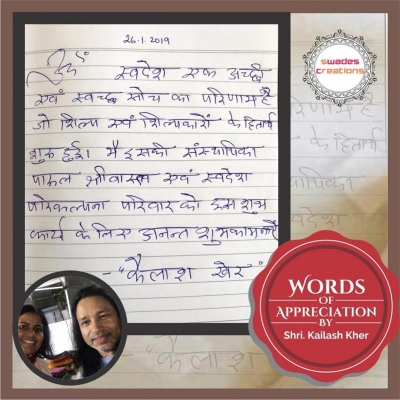
ॐ स्वदेश एक अच्छी एवं स्वच्छ सोच का परिणाम हैं | जो शिल्प एवं शिल्पकारों के हितार्थ शुरू हुई | मै इसकी संस्थापिका पारुल श्रीवास्तव एवं स्वदेश परिकल्पना परिवार को इस शुभ कार्य के लिए अनंत शुभ-कामनाऐ |
Excellent stuff…lovely collection…loved each style.